Material guidance

Choose the right material direction before you request an injection moulding quote.

Material decisions affect performance, tooling assumptions, finish, tolerance, cycle time, quality, cost, and production planning. Use this guide to choose the right next step: send drawings, request a quote, ask for DFM support, or prepare more information first.

Function-first review DFM-aware routing Manual partner handoff
Diverse professional team reviewing injection moulded product samples, resin pellets, colour chips, finish swatches, and tooling context for material guidance
Better material context creates clearer quote, tooling, and production conversations.

Quick decision support

Material selection starts with the part’s job, not just the resin name.

The right material depends on what the part must do, where it will be used, what it must withstand, how it should look, how repeatable production needs to be, and how the mould may need to be designed.

You can still begin with partial information. If the final material is unknown, send the drawings and describe the product requirement so the first review can route the project properly.

Usually ready for quote intake when

Files, target quantities, material direction, finish, tolerance expectations, timeline, and tooling status are reasonably clear.

Request a Quote

Usually better for DFM support when

Material choice depends on wall thickness, draft, ribs, bosses, snap fits, undercuts, surface finish, or tooling practicality.

Review DFM Support

Usually best to send drawings when

You have CAD, 2D drawings, sketches, photos, samples, or partial details but are not sure whether the project is quote-ready.

Send Drawings

What affects material choice

Use the product requirement to guide the plastic conversation.

A stronger first review connects material choice to function, design, tooling, quality, production, and commercial context.

Professional product and material review table with moulded plastic parts, resin pellets, colour samples, and finish swatches

Product function

Start with what the part has to do

Load, movement, flexibility, sealing, impact, assembly, cosmetics, and touch points all shape the material conversation before a quote can be useful.

Injection moulding material selection with resin pellets, plastic parts, and finish samples in a clean industrial review setting

Material direction

Translate requirements into resin options

ABS, PP, PC, nylon, acetal, TPE, TPU, filled grades, recycled content, or specialty resins may fit different requirements and trade-offs.

Diverse technical review team discussing drawings and moulded plastic samples before injection moulding material review

Design fit

Check whether the design supports the material

Wall thickness, ribs, bosses, draft, snap fits, undercuts, weld lines, and shrinkage can all change which material path makes sense.

Engineering support team reviewing metal mould tooling and plastic product samples for injection moulding material implications

Tooling impact

Review the mould implications early

Material behaviour can affect shrinkage, venting, gating, cooling, texture, sampling, and the overall tooling conversation.

Plastic material swatches, resin pellets, colour samples, and moulded parts arranged for quality and finish review

Quality and finish

Make cosmetic and inspection expectations visible

Colour, texture, gloss, tolerances, cosmetic surfaces, assembly fit, and repeatability should be described before production review.

Buyer-support professionals inspecting prototype moulded parts, packaging cues, and project notes before production-path review

Production path

Connect material choice to volume and timing

Prototype quantities, first orders, annual volume, repeat demand, packaging, and delivery context can influence the best route forward.

Common starting points

Start with the requirement, then discuss the resin.

ABS, PP, PC, nylon, acetal, TPE, TPU, filled grades, and specialty plastics can all be useful in the right project. The issue is not whether one resin is generally best. The issue is whether it fits the part, mould, application, quality target, and production plan.

Use this as a conversation starter, not a final specification. Final selection may require qualified engineering, testing, regulatory, or manufacturing review.

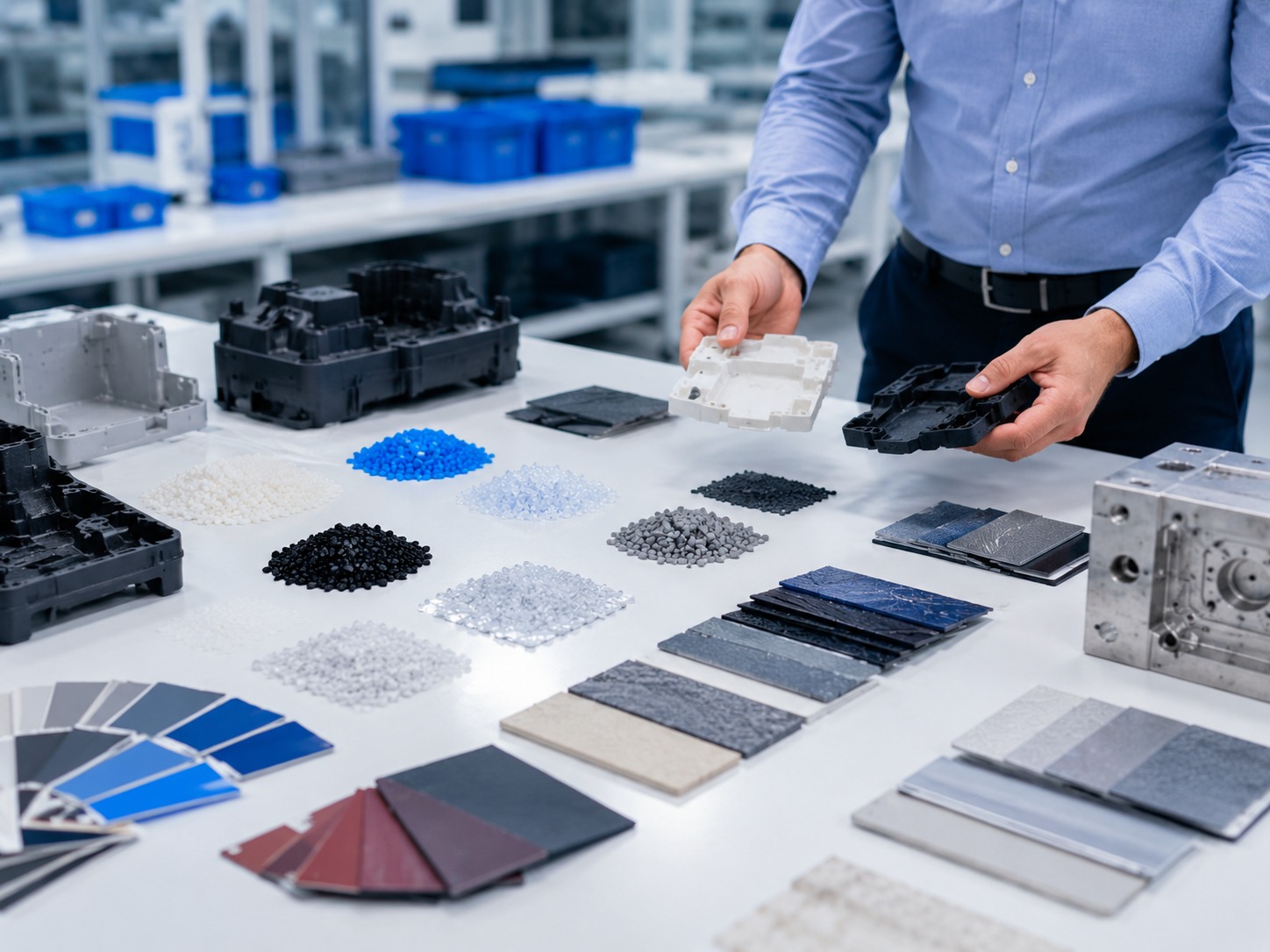
Professional material selection scene with moulded plastic parts, resin pellets, colour chips, and finish swatches
Material direction is strongest when it is tied to the part’s job and production path.
Material directionOften considered forReview carefully
ABSGeneral housings, covers, fixtures, and many durable appearance-sensitive parts.UV exposure, chemical exposure, flame rating, high heat, and outdoor use may require careful review.
PPContainers, caps, living hinges, lightweight parts, chemically resistant components, and cost-sensitive production.Stiffness, dimensional stability, surface finish, and tolerance expectations should be discussed early.
PCImpact-resistant parts, clear components, housings, guards, and higher-performance applications.Cost, stress cracking, processing, texture, and application environment need review.
PA / NylonMechanical parts, clips, gears, wear components, brackets, and load-bearing applications.Moisture absorption, fillers, dimensional change, wear, and environment should be clarified.
POM / AcetalPrecision mechanical parts, low-friction parts, moving components, and tight-fit applications.Tolerance strategy, chemical exposure, wear, fit, and processing assumptions matter.
TPE / TPUFlexible, grippy, sealing, cushioning, soft-touch, and overmoulding-style requirements.Hardness, bonding, compression, wear, surface feel, and tooling approach should be reviewed.
Filled or specialty gradesHigher stiffness, heat performance, wear resistance, conductivity, flame performance, or specific technical needs.Tool wear, flow, surface finish, cost, documentation, testing, and suitability require additional review.

Choose the next step

Material uncertainty should route the project, not stop it.

Use these paths to move from material questions to the right intake route.

01

I have files, but I do not know the material yet.

Send drawings, CAD, sketches, photos, or sample references. Include the part function and use environment so the review can start with context.

Send Drawings
02

The design may need material or manufacturability review.

Use the DFM path when geometry, wall thickness, snap fits, ribs, finish, or tolerance expectations may affect the material choice.

Review DFM Support
03

The project is ready for quote intake.

Request a quote when files, quantities, timing, material direction, quality expectations, and tooling status are reasonably clear.

Request a Quote
04

Tooling is central to the decision.

Review custom mould requirements when the tool, sampling expectations, transfer status, complexity, or finish drives the project path.

Custom Mould Review
05

Part supply and repeat production are central.

Use the plastic parts path when the buyer needs moulded part supply, repeat production planning, packaging, or production-stage support.

Plastic Parts Path
06

Quality expectations need clarification.

Use process and quality guidance when tolerance, inspection, cosmetic standards, assembly fit, or approval process matters.

Quality Guidance
Diverse injection moulding review team discussing drawings, CAD context, and plastic part samples before material guidance
Files plus use-case context help the review identify missing information.

Before you submit

Five details make material guidance easier to review.

You do not need a finished engineering package to start. The strongest submissions explain what the part does, where it will be used, what it must withstand, how it should look, and what commercial path is expected.

01

Describe the part function

Explain what the part does, how it fits with other components, whether it moves, seals, holds load, flexes, clips, or needs a specific surface feel.

02

Explain the operating environment

Note heat, cold, UV, water, chemicals, wear, friction, impact, electrical exposure, food-contact concerns, or other use conditions.

03

Share visual and quality expectations

Mention cosmetic surfaces, colour, texture, transparency, gloss, branding concerns, inspection points, tolerances, and approval process.

04

Add production and commercial context

Include target quantities, first order size, annual volume, timeline, budget context, packaging, delivery destination, and repeat-production expectations.

05

Flag uncertainty and confidentiality needs

Say what is unknown, whether an NDA is needed, and whether the files include sensitive product information or regulated concerns.

Quality, supply, and sustainability

Good material direction balances performance, consistency, and availability.

Recycled content, bio-based plastics, filled grades, colour requirements, specialty performance, and sourcing preferences can all be valuable. They should still be reviewed against part function, finish, consistency, documentation, timing, and quality expectations.

  • Clarify whether sustainability is a requirement or preference
  • Identify performance targets that cannot be compromised
  • Describe cosmetic surfaces, colour, texture, and finish expectations
  • Flag testing, certification, or documentation needs before quote review
Premium plastic material swatches, resin pellets, colour chips, and moulded parts arranged for finish, quality, and supply review
Quality and material consistency should be visible before production-path review.

Safe review boundary

Material guidance supports intake and routing.

InjectionMouldHub helps organize project details for manual review and qualified manufacturing partner follow-up. This page does not provide final engineering approval, regulatory approval, testing approval, guaranteed pricing, or a binding quote.

Material questions

Common questions before choosing or confirming a plastic.

Can I submit an injection moulding project if I do not know the material yet?

Yes. You can send the project context you have, including drawings, CAD, sketches, photos, part function, use environment, quantities, and known constraints. The first review can help identify whether the next step is quote intake, DFM support, or more material clarification.

What material information should I include before requesting a quote?

Include any known resin preference, comparable part, use environment, temperature or UV exposure, chemical exposure, strength needs, flexibility needs, colour, finish, tolerance expectations, quality requirements, and target quantities.

Should I choose the cheapest plastic for my part?

Not automatically. Lower resin cost can be offset by performance limits, quality issues, tooling assumptions, cycle-time implications, part failure risk, or unsuitable finish. The better starting point is the part requirement.

When should I use DFM support instead of requesting a quote?

Use DFM support when geometry, wall thickness, ribs, bosses, snap fits, undercuts, draft, material choice, surface finish, or tooling practicality may affect manufacturability.

Can material choice affect mould cost?

Yes. Material behaviour can affect shrinkage, flow, venting, cooling, tool steel considerations, texture, sampling, cycle time, and tolerance strategy. Tooling implications should be reviewed before the project is treated as quote-ready.

Can I ask about recycled or bio-based plastic options?

Yes. Describe whether sustainability is a requirement or preference, and include performance, colour, finish, consistency, testing, and documentation expectations. These options should be reviewed against function and quality requirements.

Is this material guidance a final engineering or regulatory approval?

No. Material guidance through InjectionMouldHub supports project intake and qualified partner routing. It is not final engineering approval, regulatory approval, testing approval, or a guarantee of suitability.

What happens after I submit material questions or drawings?

The submitted information is manually reviewed for route fit. Depending on the details, the next step may be a quote-readiness conversation, DFM support, custom mould review, plastic parts production-path review, or qualified manufacturing partner follow-up.

Ready to move forward?

Send the material context you have, then move to the right next path.

Share drawings, quantities, part function, environment, and known material or quality requirements. The review can help clarify whether the project should move to quote intake, file review, DFM support, custom mould review, or plastic parts production-path discussion.

Professional product and service review team comparing injection moulded parts, resin samples, colour chips, finish swatches, and tooling context before selecting the next project path
Clearer material context helps route the project to the right conversation.